
Courtesy: Prof Nabil Ebraheim, University of Toledo, Ohio, USA
Aneurysmal Bone Cyst: Clinical Features and Management
Overview
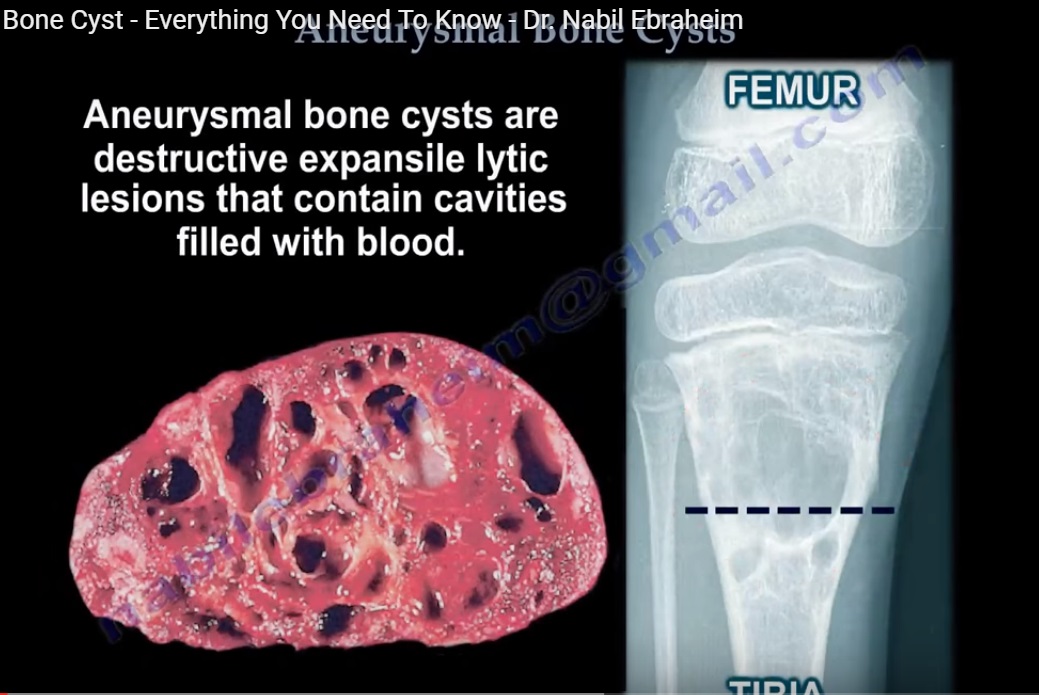
- Aneurysmal bone cyst is a benign, expansile, lytic bone lesion characterized by blood filled cavities separated by fibrous septa.
- It most commonly affects children and adolescents.
Common Locations
- Typical sites include the posterior elements of the vertebrae.
- Common long bone sites include the distal femur and proximal tibia.
- The lesion is usually located in the metaphysis.
Radiological Features
- Radiographs show an expansile lytic lesion with cortical thinning.
- The lesion may enlarge beyond the normal width of the bone.
- A thin periosteal rim is often present.
- Magnetic resonance imaging and computed tomography commonly demonstrate fluid fluid levels.
Pathogenesis
- The lesion may occur as a primary tumor with USP6 gene rearrangement.
- It may also arise secondarily in association with other lesions in approximately thirty percent of cases.
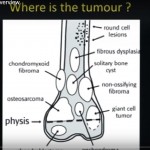
- Associated lesions include giant cell tumor, fibrous dysplasia, chondroblastoma, and chondromyxoid fibroma.
Histopathology
- The lesion consists of blood filled cystic spaces and fibrous septa.
- The septa may contain multinucleated giant cells and fibroblasts.
Differential Diagnosis
- Simple bone cyst.
- Telangiectatic osteosarcoma.
- Giant cell tumor.
Clinical Presentation
- Patients commonly present with pain and swelling.
- Pathological fracture may occur but is uncommon.
- Spinal lesions may produce neurological symptoms due to compression.
Management
- Initial care may include immobilization if fracture is present.
- Definitive treatment usually involves curettage with bone grafting.
- Adjuvant therapies may be used to reduce recurrence.
Recurrence
- Recurrence occurs in approximately twenty five percent of cases.
- The risk of recurrence is higher in patients with open growth plates.
Summary
- Aneurysmal bone cyst is a benign but locally aggressive lesion requiring appropriate diagnosis and treatment.
- Timely management reduces complications and recurrence.
Leave a Reply