
Courtesy: Prof Nabil Ebraheim, University of Toledo, Ohio, USA
Overview of Osteocytes
- Osteocytes are the most abundant cells in bone tissue.
- They represent approximately 90 percent of all bone cells.
- Osteocytes originate from mesenchymal stem cells through osteoblast differentiation.
- Some osteoblasts become embedded in mineralized bone matrix and transform into osteocytes.
Structure of Osteocytes
- Osteocytes are living cells embedded within mineralized bone matrix.
- Each osteocyte lies in a small cavity known as a lacuna.
- Osteocytes contain a large nucleus and relatively small amount of cytoplasm.
- They demonstrate a high nucleus to cytoplasm ratio compared with osteoblasts.
- Osteocytes extend long cellular processes called dendrites.
- These dendrites travel through small channels in bone known as canaliculi.
Osteocyte Network and Communication
- Osteocytes form an extensive interconnected cellular network.
- Cellular processes extend through canaliculi to connect neighboring osteocytes.
- Communication between osteocytes occurs through gap junctions.
- This network allows transmission of biochemical and mechanical signals.
Functions of Osteocytes
- Maintain the structure and integrity of mature bone.
- Help regulate the extracellular bone matrix.
- Participate in regulation of calcium and phosphate levels within bone.
- Osteocytes are long living cells that may survive for decades.
Role in Bone Remodeling
- Bone remodeling maintains skeletal strength and structural integrity.
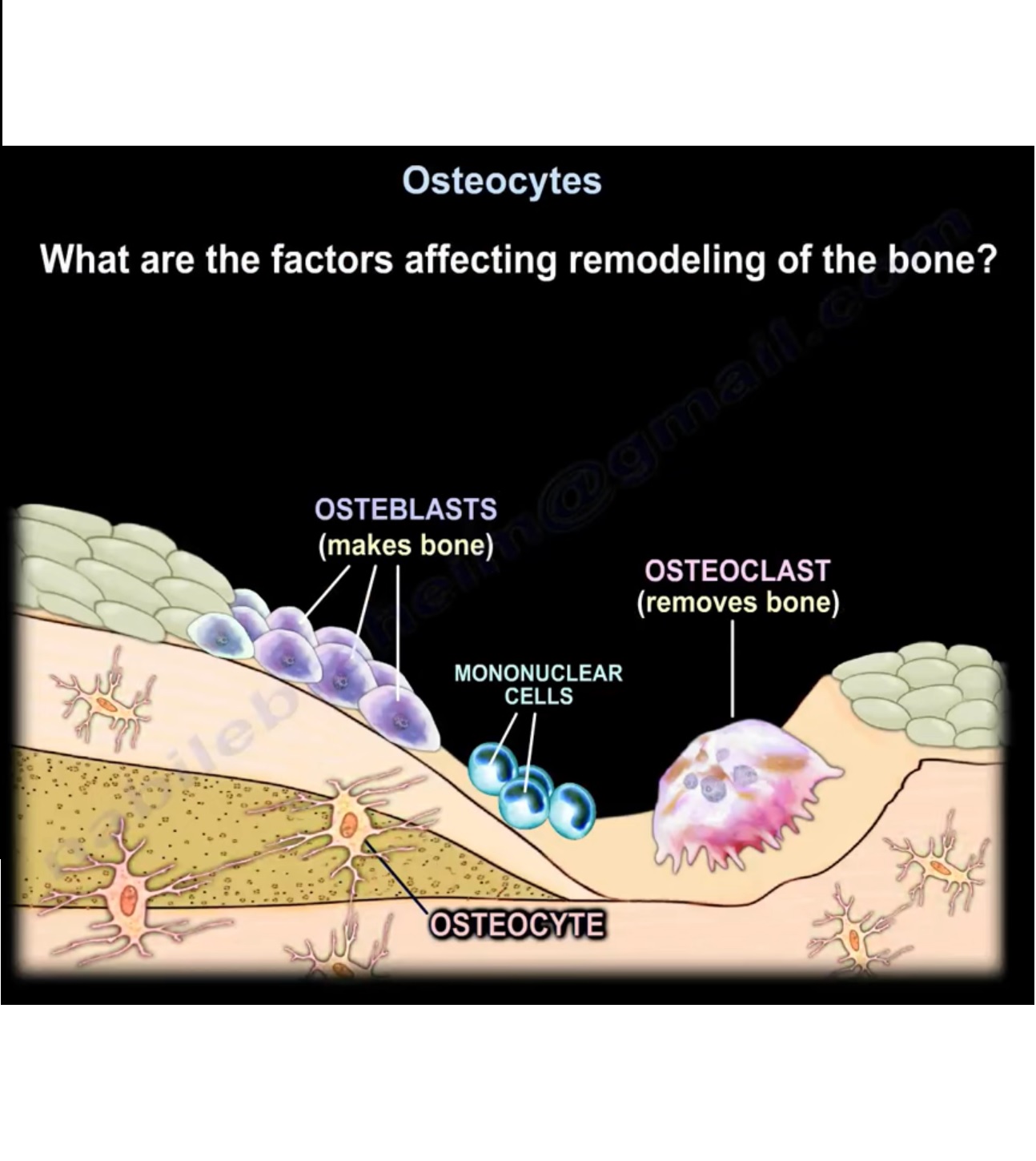
- Osteoblasts are responsible for bone formation.
- Osteoclasts are responsible for bone resorption.
- Osteocytes coordinate the balance between bone formation and bone resorption.
Factors Influencing Bone Remodeling
- Circulatory factors including blood supply.
- Metabolic factors including hormones and mineral balance.
- Mechanical factors such as weight bearing and skeletal loading.
- Mechanical loading is one of the most important regulators of bone remodeling.
Osteocytes as Mechanosensors
- Osteocytes act as mechanosensory cells in bone.
- They detect mechanical stress and strain within the skeleton.
- Signals generated by osteocytes stimulate bone remodeling in areas of increased mechanical stress.
- This mechanism contributes to adaptive changes in bone architecture.
Osteoid Formation and Osteoblast Transformation
- Osteoblasts produce osteoid, the unmineralized bone matrix.
- Osteoid is composed predominantly of type I collagen.
- Osteoblasts deposit osteoid around themselves.
- Some osteoblasts become trapped within the matrix and differentiate into osteocytes.
Hormonal Regulation of Bone Cells
- Calcitonin inhibits osteoclast activity and reduces bone resorption.
- Parathyroid hormone influences bone remodeling and calcium metabolism.
- Parathyroid hormone stimulates osteoblast mediated signaling pathways that regulate osteoclast activity.

Leave a Reply