
Courtesy Dr Patric W Joyuner, Dr Ashok Shyam, Ortho TV
ACL Reconstruction: Adjustable Loop Buttons & Soft Tissue Grafts
Introduction
- Focus on:
- Soft tissue grafts
- Femoral fixation
- Adjustable loop devices
- Practical surgical technique
ACL reconstruction can be simplified into:
- Graft preparation
- Femoral tunnel creation
- Tibial tunnel creation
- Tunnel drilling technique
- Fixation method
Graft Choice
Hamstring vs Bone–Patellar Tendon–Bone (BTB)
Similarities
No major difference in:
- Functional outcomes
- Clinical results
- Long-term osteoarthritis risk
Patellar Tendon (BTB)
Advantages:
- Better static stability
- Lower graft failure in young athletes
Disadvantages:
- Increased anterior knee pain
- Higher donor site morbidity
Hamstring Graft
Advantages:
- Less anterior knee pain
- Less kneeling pain
Disadvantages:
- Slightly increased laxity in some studies
- Mild reduction in knee flexion strength
Meta-analysis Findings
- Four-strand hamstring grafts provide:
- Comparable stability
- Comparable function
- Lower anterior knee pain compared with BTB grafts
Osteoarthritis Risk
- ACL injury itself initiates degenerative change
- No major long-term difference between:
- Hamstring graft
- BTB graft
- Likely quadriceps tendon graft as well
Age-Based Outcomes
Patients <20–25 Years
- BTB graft shows lower failure rate
- Hamstring graft may have:
- 3–3.6× higher failure rate
Reason:
- Higher activity level in younger patients
Patients >25 Years
- No significant difference between graft types
Graft Size: Critical Concept
Most Important Technical Factor
Graft Diameter >8 mm
- Failure rate <2%
Graft Diameter <8 mm
- Failure rate may rise to 7–14%
Surgical Pearl
- If graft is small:
- Fold graft to increase diameter
Graft Preparation Technique (SpeedTrap)
Advantages:
- Fast preparation
- Strong fixation
- No tendon holes required
- Less graft damage
Evidence:
- Comparable strength to FiberLoop
- Faster than traditional techniques
Important Caution
- Suture material matters
- FiberWire may damage tendon before suture failure
Tunnel Drilling System (Twister)
Features
- Adjustable reamer:
- 6–12 mm
- Half-size increments
Advantages:
- Cost-effective
- Single instrument for multiple tunnel sizes
Applications:
- ACL reconstruction
- PCL reconstruction
- Meniscal root repair
Tibial Tunnel Technique
Circle Guide
Advantages:
- High reproducibility
- Central tunnel placement
- Reduces anterior/posterior malposition
Femoral Fixation Devices
Fixed Loop vs Adjustable Loop
Fixed Loop Devices
- Approximately 1.3 mm displacement
Traditional Adjustable Loop Devices
- Up to 4 mm displacement
- Potential biomechanical concern
Rigid Adjustable Loop Devices
Advantages:
- Lower displacement (~1.7 mm)
- Comparable to fixed loop devices
- Better stability
- Less stretching
Considered superior to traditional adjustable systems.
Surgical Pearls
Notch and Tunnel Preparation
Avoid Routine Notchplasty
Reasons:
- Preserves anatomy
- Prevents unnecessary bone removal
Preserve PCL Fibers
Benefits:
- Better orientation
- Anatomical reference
Preserve Small Tibial Stump
Benefits:
- Helps proprioception
Femoral Tunnel Placement
Preferred Position
- Posterior placement preferred
Important principle:
- Posterior error is safer than anterior error
Reason:
Posterior Blowout
- Salvageable with suspensory fixation
Anterior Tunnel Placement
- Poor biomechanics
- Higher failure risk
Intraoperative Positioning
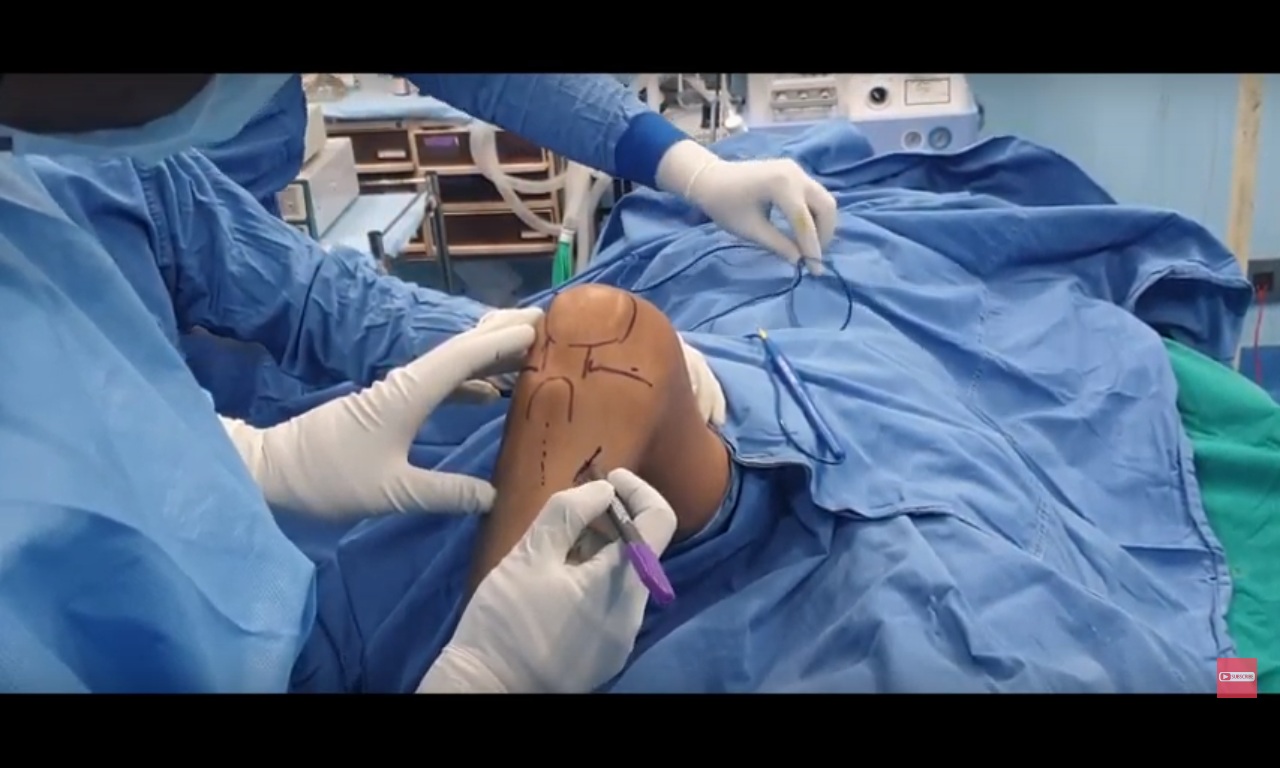
Figure-of-4 Position
Advantages:
- Better visualization
- Protects lateral meniscus during debridement
Final Recommendations
Hamstring Graft
Good option if:
- Diameter >8 mm
Patients >20 Years
- Hamstring graft equivalent to BTB in most cases
Younger Athletes
Consider:
- BTB graft
- Quadriceps tendon graft
Reason:
- Larger graft size
- Lower failure risk
Key Takeaways
- Graft size is one of the strongest predictors of success
- Aim for graft diameter >8 mm
- Younger age increases graft failure risk
- Rigid adjustable loops provide:
- Better stability
- Less displacement
- Reliable fixation
- Posterior femoral tunnel positioning is safer than anterior malposition
Reported Outcome

Leave a Reply