• Skip to main content
  • Skip to secondary menu
  • Skip to primary sidebar
OrthopaedicPrinciples.com

OrthopaedicPrinciples.com

Integrating Principles and Evidence

Integrating Principles and Evidence

  • Home
  • Editorial Board
  • Our Books
    • Evidence Based Orthopaedic Principles
  • Courses
  • Exams
  • Reviews
  • Live Program
  • Contact

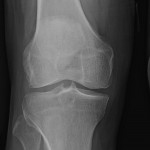
AAOS guidelines on OCD Knee

  • Osteochondritis dissecans is a condition of the joints that appears to affect subchondral bone primarily, with  secondary effects on articular cartilage
  • Osteochondritis Dissecans of the knee has been a disorder in which proper treatment guidelines have not been established
  • Several aetiologies like, family history, repetitive micro-trauma, growth disorders, and ischemia—have been proposed
  • One study identified the incidence of OCD as  29 cases per 100,000 males and 18 cases per 100,000 females.
  • The AAOS has issued guidelines by conducting reviews of high quality articles that were published between 1996 and 2010
  • The workgroup formulated the following treatment guidelines after researching through these articles
  1. Symptomatic skeletally immature patients with loose or completely detached lesions should be offered surgery as an option. There is, however, no evidence for any particular kind of surgery;
  2. Patients who remain symptomatic after treatment for OCD should have a repeat history and physical examination, X-rays, and/or MRI to assess healing;
  3. Patients who receive surgical treatment of OCD should be offered postoperative physical therapy.
  4. The working group is unable to recommend for or against counseling patients about whether activity modification and weight control prevents onset and progression of OCD to osteoarthritis (osteoarthrosis)


  • Even undertaking this research on evaluating the recommendation of OCD of the knee, the AAOS working group believes that are a lot of areas that needs further research.
  • The following were described as the areas where further research would be necessary:-
  1. Inter- and intraobserver reliability studies on lesion classification for radiographs, MRI, and arthroscopy.
  2. Prospective cohort studies of knee OCD lesions treated nonsurgically should be conducted to identify the independent predictors of success of nonsurgical management of an OCD lesion.
  3. Randomized controlled trials should be conducted to establish the optimal physical therapy and nonsurgical treatment strategies and physical therapy interventions for patients with OCD of the knee.
  4. Randomized controlled trials should be conducted to establish the optimal surgical treatment strategies for OCD of the knee.
  5. Randomized controlled trials should be conducted to determine the optimal postoperative management of patients with OCD of the knee.

Further reading:

1. http://www.aaos.org/news/aaosnow/feb11/cover1.asp
Post Views: 1,689

Related Posts

  • Case Study, Hip fracture, #AAOS Evidence Based Practice Guidelines

    Popular answer may not imply right answer, Follow our twitter handle for the right answer,…

  • Case Study, Knee #Osteoarthritis, #AAOS Evidence Based Practice Guidelines

    Popular answer may not imply right answer, Follow our twitter handle for the right answer,…

  • AAOS OKU -6 Hip and Knee Reconstruction

    Orthopaedic Knowledge Update 6: Hip and Knee Reconstruction 6 allows you to advance patient care…

Reader Interactions

Leave a Reply

Your email address will not be published. Required fields are marked *

Primary Sidebar

Follow Us

instagram slideshare

Categories

  • -Applied Anatomy
  • -Approaches
  • -Basic Sciences
  • -Cartilage & Meniscus
  • -Classifications
  • -Examination
  • -Foot and Ankle
  • -Foot and Ankle Trauma
  • -FRCS(Tr and Orth) tutorials
  • -Gait
  • -Hand and Wrist
  • -Hand and Wrist Trauma
  • -Hand Infections
  • -Hip and Knee
  • -Hip Preservation
  • -Infections
  • -Joint Reconstruction
  • -Knee Arthroplasty
  • -Knee Preservation
  • -Metabolic Disorders
  • -Oncology
  • -OrthoBiologics
  • -OrthoPlastic
  • -Paediatric Orthopaedics
  • -Paediatric Trauma
  • -Patellofemoral Joint
  • -Pelvis
  • -Peripheral Nerves
  • -Principles
  • -Principles of Surgery
  • -Radiology
  • -Rheumatology
  • -Shoulder and Elbow
  • -Shoulder and Elbow Arthroplasty
  • -Spine Deformity
  • -Spine Oncology
  • -Spine Trauma
  • -Spine, Pelvis & Neurology
  • -Sports Ankle and Foot
  • -Sports Elbow
  • -Sports Knee
  • -Sports Medicine
  • -Sports Medicine Hip
  • -Sports Shoulder
  • -Sports Wrist
  • -Statistics
  • -Technical Tip
  • -Technology in Orth
  • -Trauma
  • -Trauma (Upper Limb)
  • -Trauma Life Support
  • -Trauma Reconstruction
  • Book Shelf
  • Book Shelf Medical
  • Careers
  • Case Studies and Free Papers
  • DNB Ortho
  • Evidence Based Orthopaedic Principles
  • Evidence Based Orthopaedics
  • Exam Corner
  • Fellowships
  • Guest Editor
  • Guest Reviews
  • Image Quiz
  • Instructional Course Lectures
  • Journal Club
  • MCQs
  • Meetings and Courses
  • Multimedia
  • News and Blog
  • Plaster Techniques
  • Podcasts
  • Public Health
  • Rehabilitation
  • Research
  • Shorts and Reels
Copyright@orthopaedicprinciples.com. All right rerserved.