
The Galeazzi test (also known as the Allis sign) is a clinical assessment used primarily in infants to identify developmental dysplasia of the hip (DDH) or a leg-length discrepancy.
How the Test is Performed
-
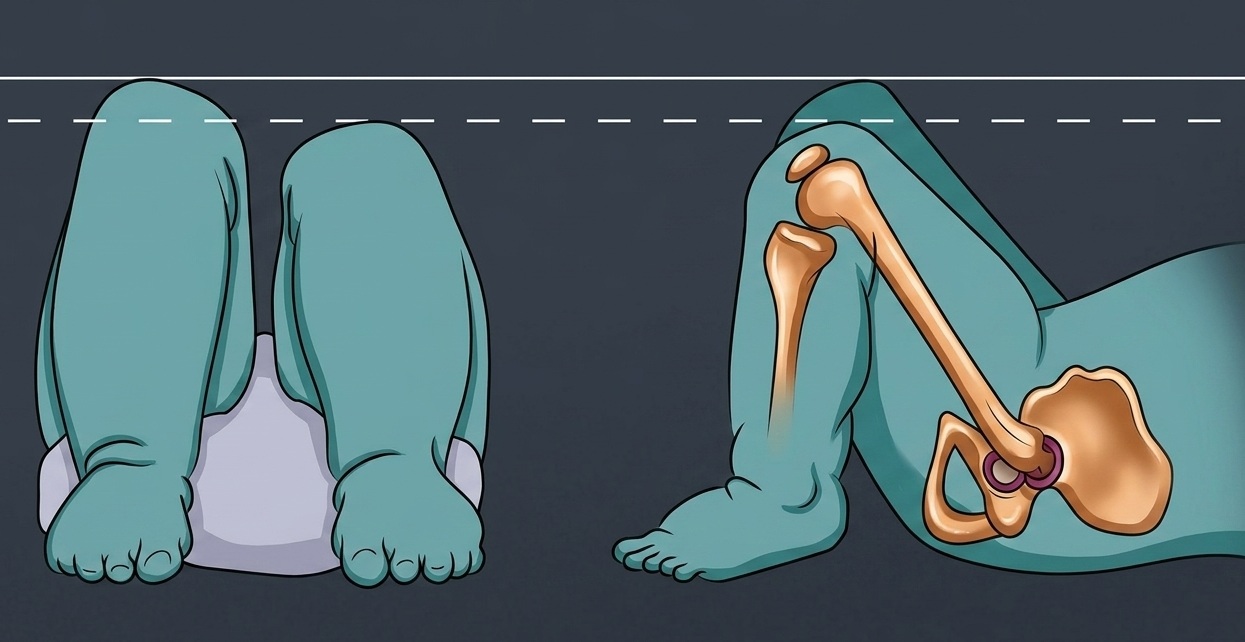
The infant is placed on a firm, flat surface in a supine position (lying on their back).
-
Both hips and knees are flexed, with the feet placed flat on the surface and the heels touching the buttocks.
-
The clinician then compares the height of the knees from a side or foot-end view.
Interpreting the Results
-
Negative Result: Both knees appear at the same level, suggesting symmetrical hip and femur development.
-
Positive Result: One knee sits lower than the other. This indicates a shortening of the femur or a hip dislocation on the side where the knee is lower.
Leave a Reply